Walk into any specialty pickleball shop or scroll through the top brands online and you will see paddles listed at $150, $180, even $250. The marketing is polished. The names are familiar. The sponsored players are recognizable. And if you have ever wondered what you are actually paying for when you buy one of those paddles, the answer might surprise you.
You are mostly paying for the marketing itself.
The Open Secret of Pickleball Paddle Manufacturing
The pickleball paddle industry is built on a manufacturing reality that most brands do not advertise: a large portion of paddles across multiple price points are produced by a small number of factories, primarily in China, using the same grades of raw materials. T700 carbon fiber is T700 carbon fiber. A 16mm polypropylene honeycomb core produced in one factory is structurally the same as one produced in another. The paddle you buy for $180 and the paddle that retails for $99 frequently start from the same material inputs.
What changes between them is not the paddle. It is everything wrapped around the paddle: the sponsored athlete contracts, the trade show presence, the Instagram campaigns, the influencer gifting programs, the retail distributor margins, and the brand overhead that gets calculated into every unit sold. When a major brand signs a pro player to a multi-year deal, that cost gets distributed across every paddle they sell. You are the one paying for it.
This is not unique to pickleball. It happens in golf, in tennis, in cycling. Performance equipment markets mature, manufacturing consolidates, and the price premium shifts from the product to the brand story. The question is whether the buyer knows it.
Why Weekend Warrior Was Founded
Weekend Warrior Pickleball was started as a direct response to that model. The founder looked at the paddle market, saw the manufacturing reality, and made a simple decision: build a paddle with the same quality materials, remove every layer of cost that is not the paddle itself, and sell directly to the player at a price that reflects what it actually costs to make.
No sponsored professionals. No retail distribution network. No trade show circuit. No middlemen taking a margin at each step between the factory and your hand. Just a direct-to-consumer brand that puts the savings back into the product and the player.
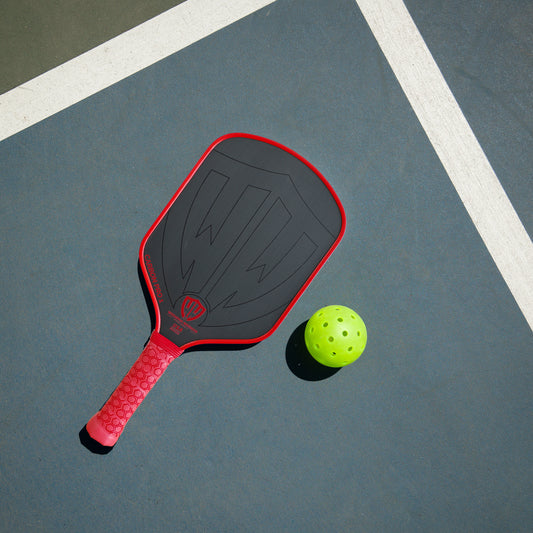
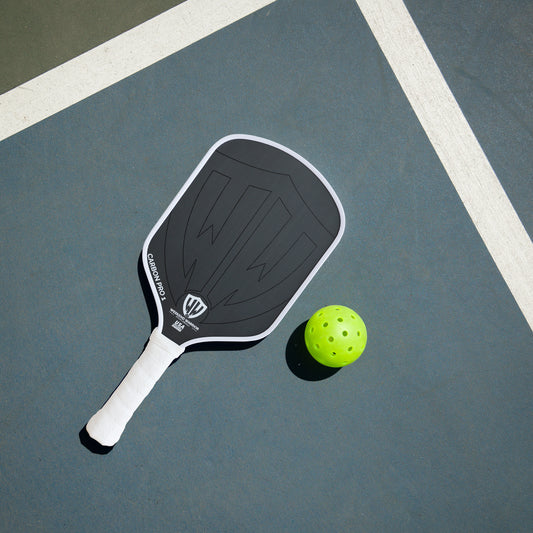
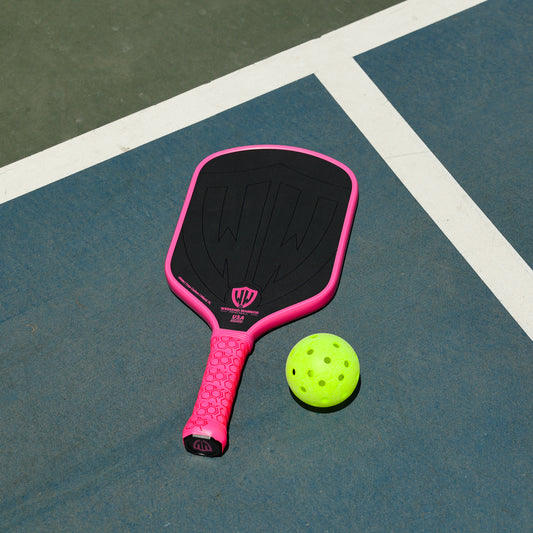
The result is the Carbon Pro 1 at $99.99. T700 raw carbon fiber face. 16mm polymer honeycomb core. Dimensions and weight that match paddles selling at $149 to $199. Not because the CP1 cut corners, but because the brands charging $149 to $199 are funding something that has nothing to do with the paddle in your hand.
What Actually Comes in the Box
Most paddle brands, regardless of price, ship you a paddle. If you are lucky, there is a sleeve. The accessories you actually need to protect and maintain the paddle are sold separately, often by the same brand that just charged you $180 for the paddle.
Weekend Warrior took a different approach from day one. Every CP1 ships as a complete player package because the belief behind the brand is that a serious player should have everything they need to play, protect, and maintain their equipment from the moment it arrives. The box includes:
- Protective paddle cover — neoprene, form-fitting, protects the carbon surface between sessions. Most brands charge $15 to $20 for this separately.
- Weighted lead tape — allows you to adjust the swing weight and balance point of the paddle to match your style. A standard roll sells for $10 to $15 at sporting goods stores.
- Wrist sweatband — keeps moisture off your grip during extended play. Small detail, real difference late in a match.
- Paddle surface eraser — and this one matters more than most players realize.
The Eraser: The Accessory the Industry Ignored
Raw carbon fiber paddles are defined by their surface texture. That texture, the natural grit of the carbon weave, is what grips the ball and generates spin. It is the reason players switch from fiberglass to carbon. It is the performance advantage the $180 paddles are selling.
But that surface collects residue. Ball scuff, court dust, sweat transfer from contact. Over time, that buildup fills in the texture and smooths the surface. The spin you bought the paddle for gradually disappears, and most players do not know why their paddle feels different three months in.
The paddle surface eraser removes that residue and restores the grit. Clean the face, get the spin back. It is a simple solution to a real problem, and Weekend Warrior was the first pickleball brand to include it as a standard item in every paddle purchase.
Other brands have since added erasers to their accessory lines, often as a $10 to $15 upsell. Weekend Warrior put it in the box before anyone else did, because the CP1 is only as good as the surface texture that defines it, and making sure players can maintain that texture was part of the product from the beginning.
The Real Math
The CP1 retails at $99.99. The accessories in the box carry a combined retail value of approximately $35. The paddle itself is built with materials comparable to paddles at twice the price. When you account for what you are getting versus what you are paying, the CP1 is not a budget paddle. It is a full-price paddle from a brand that chose not to charge you for its marketing budget.
That is the Weekend Warrior model. It was true when the brand launched, and it is still true now.