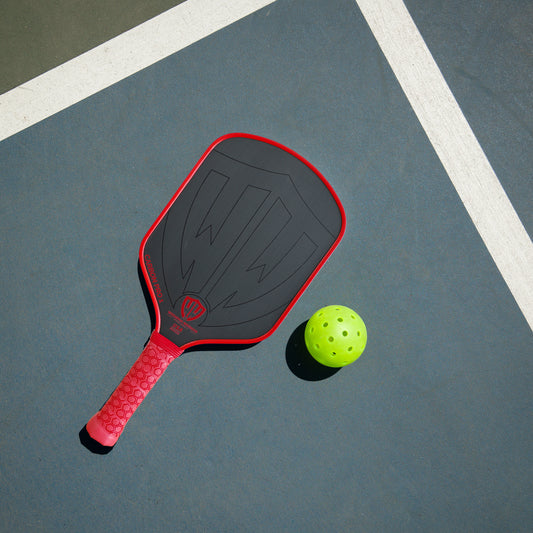
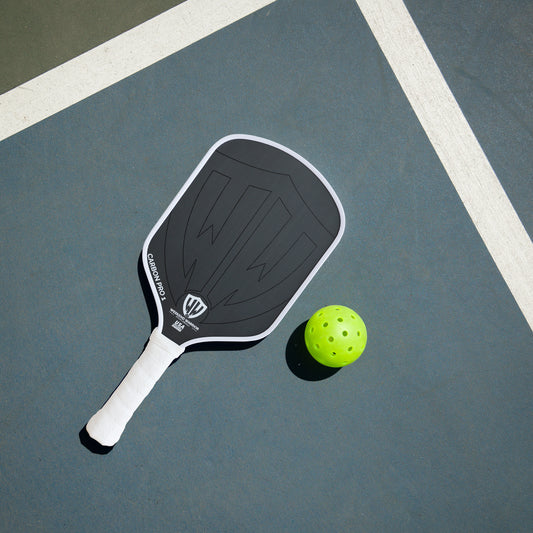
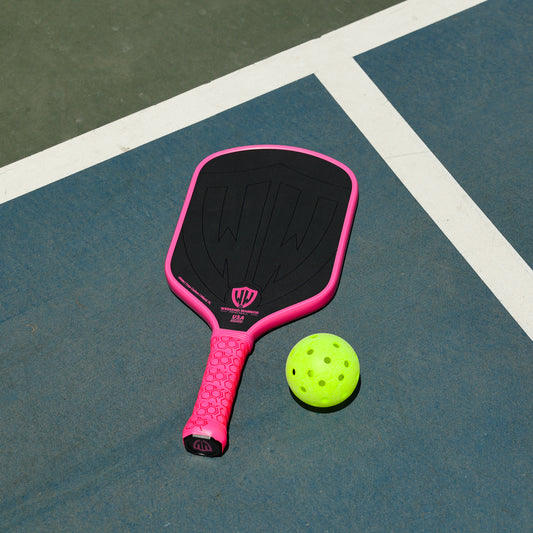
Not All Carbon Fiber Is Created Equal
If you've been shopping for a pickleball paddle, you've probably seen the words "carbon fiber" on almost every listing. But here's what most brands don't tell you: there's a massive difference between generic carbon fiber and T700 raw carbon fiber.
Understanding this difference can save you hundreds of dollars — and help you pick a paddle that actually performs.
What Is T700 Carbon Fiber?
T700 is a specific grade of carbon fiber manufactured by Toray Industries, the world's largest carbon fiber producer. It's classified as a high-strength, standard-modulus fiber, which means:
- Tensile strength: 4,900 MPa — one of the strongest commercially available carbon fibers
- Lightweight: Significantly lighter than fiberglass or standard carbon blends
- Stiffness: Excellent energy transfer from swing to ball
- Durability: Resists micro-cracking and surface degradation over time
T700 is used in aerospace, high-performance cycling, and premium sporting goods. When you see it in a pickleball paddle, you're getting material that was engineered for extreme performance environments.
What's "Standard" Carbon Fiber?
Many budget and mid-range paddles use generic carbon fiber or carbon fiber composites. These might be:
- Lower-grade carbon (T300 or unspecified blends)
- Carbon fiber mixed with fiberglass
- A thin carbon layer over a different substrate
These paddles can still play well, but they lack the spin potential, power transfer, and longevity that T700 provides.
Why T700 Matters for Spin
The raw (uncoated) T700 surface creates a natural micro-texture — tiny grooves in the carbon weave that grip the ball at impact. This is what generates spin without needing aftermarket grit sprays or textured overlays that wear off.
Coated carbon surfaces (common in cheaper paddles) are smoother, which means less friction and less spin. The raw T700 face on the Carbon Pro 1 maintains its texture through hundreds of games.
The Price Myth
Here's where it gets interesting. Paddles using T700 carbon fiber from brands like JOOLA, Selkirk, and Engage typically retail for $180-$220. But the raw material cost difference between T700 and lower-grade carbon is relatively small.
So why the huge price gap? Brand tax. Marketing budgets. Pro sponsorships. Retail margins.
The Weekend Warrior Carbon Pro 1 uses genuine T700 raw carbon fiber — the same material as those $200 paddles — at a fraction of the price. Because we sell direct, skip the influencer deals, and focus on the product instead of the packaging.
How to Verify T700 Claims
Not every brand that claims "carbon fiber" is using T700. Here's what to look for:
- The listing specifically states T700 (not just "carbon fiber" or "carbon face")
- The surface is described as raw or textured (not coated or painted)
- The manufacturer can provide material specifications
The Bottom Line
T700 raw carbon fiber is the best face material in pickleball today. It delivers superior spin, power, and durability. But you don't need to pay $200 to get it.