Why the Third Shot Drop Changes Everything
If there's one shot that separates casual pickleball players from competitive ones, it's the third shot drop. Mention it at any rec court and you'll get knowing nods from the veterans and blank stares from the newcomers. But once you understand it — and more importantly, once you own it — your game will never be the same.
In this guide, we're breaking down exactly what the third shot drop is, why it works, and how you can start drilling it into your muscle memory this week.
What Is the Third Shot Drop?
In pickleball, every rally starts with a serve (shot one) and a return (shot two). The third shot is the serving team's response to that return — and it's almost always hit from deep in the court near the baseline.
The third shot drop is a soft, arcing shot designed to land in the opponent's kitchen (the non-volley zone) as gently as possible. The goal isn't pace or power — it's placement. You want the ball to dip just over the net and die in that 7-foot zone, forcing your opponents to hit upward, which removes their ability to attack.
Done correctly, it buys you and your partner time to sprint from the baseline to the net — where most points in pickleball are won.
Why It's So Hard (and So Worth It)
Most beginners instinctively want to drive the ball hard on the third shot. And that makes sense — we're wired from tennis, ping-pong, and even golf to associate power with success. But in pickleball, power from the baseline usually means a high, attackable ball that gets put away before you reach the kitchen line.
The third shot drop demands the opposite of instinct: you have to swing through a soft shot with purpose, keep your wrist locked, and trust a gentle arc to do the work. That's why even experienced players consider it one of pickleball's trickiest fundamentals.
The Mechanics: How to Actually Hit It
1. Start With Your Grip Pressure
Loosen up. A death-grip on the paddle creates tension that kills your touch. Think of it like holding a tube of toothpaste — firm enough to control it, not so tight that paste comes out. On a scale of 1–10, aim for grip pressure around 4 or 5.
2. Use a Continental or Neutral Grip
The continental grip (paddle edge pointing down, like you're holding a hammer) gives you great versatility for drops. Avoid a heavy topspin grip here — you want a flatter, more controlled face to execute soft touch shots.
3. Low-to-High Swing Path
Bend your knees and get low. Your paddle should start below the ball and follow through upward. This creates the arc that sends the ball up and over the net, then softly down into the kitchen. If you're popping it up, you're likely starting too high or flicking the wrist.
4. Contact Point and Follow-Through
Make contact in front of your body — not off to the side or behind you. Follow through toward your target, finishing with the paddle face angled slightly upward. Your motion should feel more like a "lift" than a "push."
5. No Wrist Flick
This one bears repeating: keep your wrist firm through contact. Wrist movement adds unpredictability to a shot that needs to be precise. The power and arc come from your shoulder and the natural momentum of a relaxed arm — not your wrist.
Drills to Build Your Third Shot Drop
The Kitchen Drop Drill (Solo)
Stand at the baseline and hand-feed yourself balls. Drop the ball from waist height, let it bounce, and practice your drop shot motion. Focus entirely on landing in the kitchen — forget pace, just placement. Do 20–30 reps before every session.
The Cross-Court Drop Drill (Partner)
Have a partner stand at the kitchen line and feed you balls from mid-court. Your job: return every ball with a soft drop into their kitchen. They reset the ball back to you. This replicates the real game scenario (them at net, you back) and trains your eyes to read depth.
The 3-Ball Rally Drill
Play full points, but with one rule: you must attempt the third shot drop every single time. Don't worry if it fails — the repetition builds the neural pathway. After a week of this, your drop will start to feel automatic.
The Target Drill
Place a cone or your paddle bag in the kitchen. Aim for it from the baseline. This sharpens your precision and gives you instant visual feedback on your consistency.
Common Mistakes to Fix Right Now
- Hitting it too hard: The drop should die in the kitchen, not float to the opponent's paddle. If they're volleying it back easily, you're giving them too much pace.
- Aiming too low: Many players try to keep the ball so low that it clips the net. Give yourself a foot or two of clearance — the net is only 34 inches in the middle. Trust the arc.
- Not moving to the net: The third shot drop is a transition shot. After you hit it, GO. Sprint to the kitchen line while the ball is in the air. If you stand and admire your shot, you've wasted the whole purpose of the drop.
- Skipping it under pressure: When you're nervous or behind on the score, the temptation is to drive instead of drop. Resist it. The drop is exactly what you need when the stakes are high.
When to Use a Drive Instead
The third shot drop isn't always the right call. If the return lands short — inside the baseline or around the transition zone — you have an opportunity to drive it aggressively instead. A well-timed drive at the feet of a player rushing the net can be just as effective.
The key is reading the situation: deep return = drop. Short return = consider driving. Over time, this decision becomes instinctive.
Building It Into Your Game
Here's the honest truth: the third shot drop takes time. Most recreational players spend months drilling it before it clicks. But once it does, you'll start neutralizing hard-charging net players, reducing unforced errors, and reaching the kitchen line with confidence.
Commit to 10 minutes of drop practice before every game session. Record yourself if you can — even a phone propped against a bag will show you your swing path in ways your partner's feedback can't. And when you're playing matches, give yourself permission to miss drops in the short term. Consistency comes with reps, not just willpower.
The players dominating your local recreational courts aren't necessarily faster or stronger. They've just spent time on the fundamentals — and the third shot drop is at the top of that list.
Ready to Level Up?
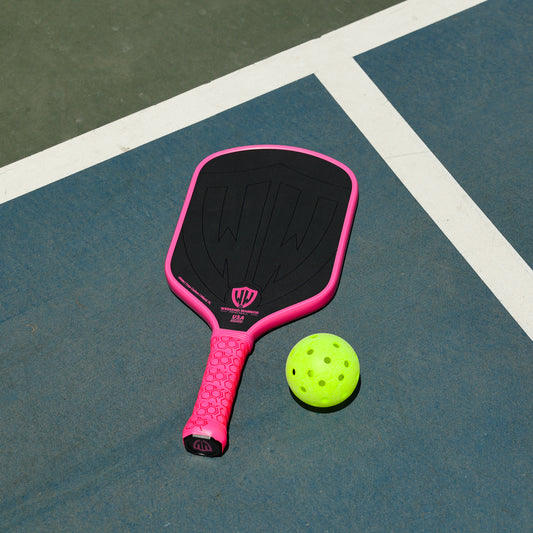
If you're serious about improving your game, equip yourself with a paddle that gives you the touch you need. Check out our collection at Weekend Warrior Pickleball — built for players who take their game seriously, even if they're not going pro.
And if you found this guide helpful, bookmark our Learning Center — we publish new training guides and gear breakdowns every week.