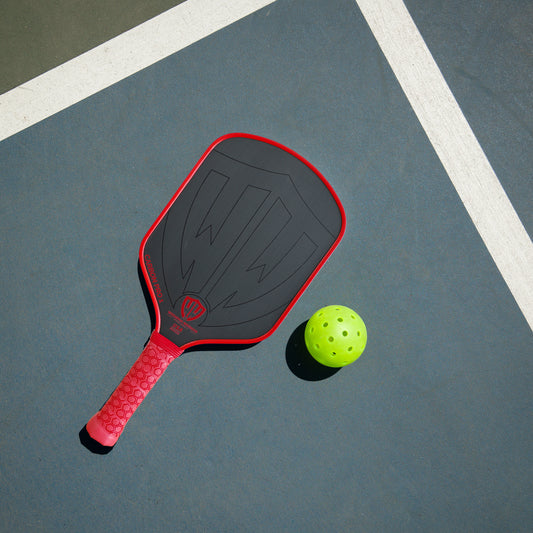
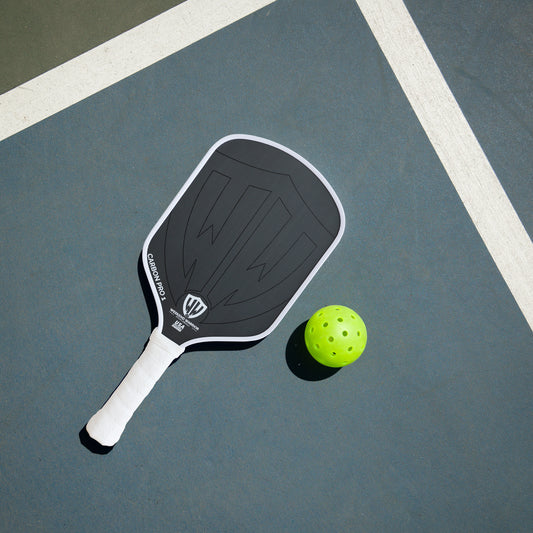
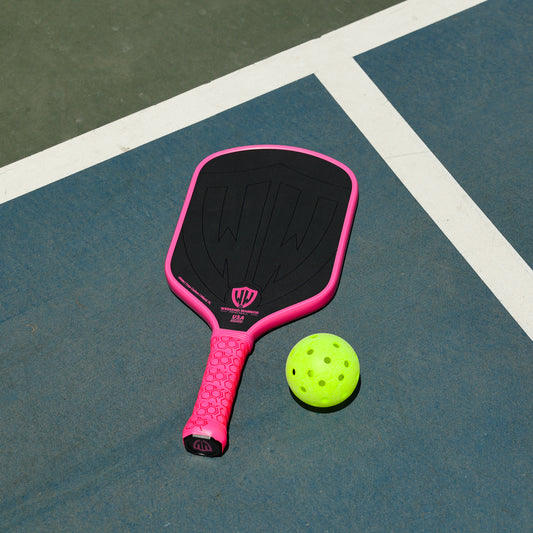
Walk into any pickleball shop or scroll through paddle reviews online and you'll see the same two words come up over and over: carbon fiber and fiberglass. They're the two dominant face materials in modern pickleball paddles, and they shape your game more than almost any other spec on the box. Yet most players pick a paddle based on color, price, or whatever the pro at the local club is using — without ever understanding what the face material is actually doing in their hand.
This guide breaks down what each material does, who it's best for, and how to choose between them (or pick a hybrid) so your next paddle actually fits your game.
Why the Face Material Matters So Much
The face of a pickleball paddle is the layer that touches the ball. Everything that happens in those few milliseconds of contact — spin, pop, control, dwell time — is influenced by the surface material and how it interacts with the paddle's core (usually polypropylene honeycomb).
Think of it like the strings on a tennis racquet. A pro can play with almost any frame, but switch the strings and the entire feel changes. In pickleball, the "strings" are the face — and the two main options are carbon fiber and fiberglass.
Carbon Fiber Paddles: Control, Spin, and Touch
Carbon fiber (sometimes labeled as T700 raw carbon fiber, Toray carbon, or simply raw carbon) is the material driving most premium paddles today. It's a woven, high-strength composite that's stiffer and more textured than fiberglass.
What Carbon Fiber Does Well
- Spin generation. The gritty, textured surface of raw carbon fiber bites into the ball, creating noticeably more topspin on drives and slice on dinks. Players coming from tennis tend to fall in love with carbon for this reason.
- Control and touch. Carbon fiber is stiffer, which means less trampoline effect. The ball doesn't fly off the face — it sits, then releases. That's exactly what you want for resets, dinks, and the soft game at the kitchen line.
- Consistency. Stiffer faces produce a more predictable response across the paddle. Your shots feel the same whether you catch the ball in the sweet spot or slightly off-center.
- Durability of the surface texture. Premium raw carbon faces hold their grit longer than painted or rolled surfaces, meaning your spin doesn't disappear after a season of play.
The Tradeoffs
Carbon paddles are typically less "poppy" than fiberglass. Beginners sometimes describe them as "dead" or "muted" — that's the stiffness at work. You have to generate your own power with swing speed and technique. Carbon is also generally more expensive, with premium raw carbon paddles often pushing past $200.
Who Should Play Carbon Fiber
- Intermediate to advanced players (3.5+) who already have a swing
- Players who rely on spin — heavy topspin drives, slice serves, cut dinks
- Anyone who prioritizes soft game and control over raw pop
- Former tennis players used to generating their own power
Fiberglass Paddles: Power, Pop, and a Forgiving Sweet Spot
Fiberglass (also marketed as composite or sometimes S-Glass) was the dominant paddle material before the carbon fiber boom, and it's still the right choice for a huge slice of the pickleball population.
What Fiberglass Does Well
- Power and pop. Fiberglass is more flexible than carbon. That flex acts like a tiny trampoline at contact, springing the ball off the face with more velocity. Drives feel hot, putaways come easy, and overheads have real bite.
- Larger sweet spot (perceived). Because the face flexes, off-center hits get more help. The paddle does some of the work for you, which is huge when you're still learning to track the ball.
- Lower price point. Solid fiberglass paddles start around $60–$100, making them ideal for new players, kids, or anyone building a stash for family game nights.
- Forgiving feel. If you're not a touch artist yet, fiberglass gives you free pop on volleys without demanding perfect technique.
The Tradeoffs
The same flex that gives fiberglass its pop also makes the soft game harder. Dinks fly long. Resets pop up into your opponent's strike zone. Spin is there, but not at the level of textured raw carbon. And the face texture tends to wear down faster — many fiberglass paddles use a painted or rolled grit that smooths out over time.
Who Should Play Fiberglass
- Beginners and recreational players (2.5–3.5) building their game
- Players who love banging — bangers, in pickleball slang
- Anyone who needs help generating power (smaller players, juniors, seniors with slower swings)
- Budget-conscious shoppers who want premium feel without premium pricing
Hybrid Paddles: The Best of Both Worlds?
Paddle makers heard the "carbon vs fiberglass" debate and answered with hybrid faces — paddles that use carbon on one part of the face and fiberglass on another, or that layer the two materials together. Some brands put fiberglass in the sweet spot for pop and carbon around the edges for control. Others stack the materials for a balanced feel across the entire face.
Hybrids can be excellent for intermediate players in transition — someone who's leveling up from a pure power game into more control and spin without giving up all their pop. Just know that "hybrid" isn't a magic word. Read reviews, demo if you can, and pay attention to whether the paddle leans carbon-side or fiberglass-side in feel.
What About Kevlar, Graphite, and the New Stuff?
You'll see other materials in the marketplace too:
- Graphite — an older form of carbon. Lighter and stiffer than fiberglass, but generally less textured than modern raw carbon. Still a solid control option, often at a lower price.
- Kevlar — used in some premium paddles for an even softer, more muted feel. Big on touch, harder to generate pop. Niche but loved by advanced soft-game players.
- Aramid and proprietary blends — brand-specific composites. Read the actual specs, not the marketing.
For 95% of players, the real decision is still carbon vs. fiberglass (or a hybrid of the two).
How to Choose: A Quick Decision Framework
Ask yourself three questions:
- What's my biggest weakness? If it's control, soft game, or spin — go carbon. If it's power or finishing points — go fiberglass.
- What's my skill level? 2.5–3.5: fiberglass or hybrid. 3.5–4.0: hybrid or carbon. 4.0+: almost always carbon.
- What's my budget? Under $100: stick with quality fiberglass or older-gen graphite. $100–$200: hybrids and entry raw carbon. $200+: premium raw carbon territory.
The Bottom Line
There is no universally "better" face material — only the one that fits your game right now. Carbon fiber rewards players who already have feel and swing; fiberglass rewards players who need help generating pace and forgiveness. Hybrids split the difference for people in between.
The best move? Demo before you buy when you can. A 20-minute hit with a paddle tells you more than any review article (yes, including this one). And remember — your game evolves. The paddle that's perfect at 3.0 probably won't be perfect at 4.0. Plan to upgrade as your skills do.
At Weekend Warrior Pickleball, we stock both carbon fiber and fiberglass paddles across price points — and we're happy to help you match a paddle to your game. Shoot us a message if you want a recommendation, or come grab a demo at one of our local events.
Now go play.